Digital Nomad Guide to Barcelona 2026: Where to Live and Work
Barcelona keeps landing at the top of remote workers’ wish lists, and it’s easy to see why: the sea on one side, the hills on the other, a walkable centre and a big international crowd that already works the way you do. But arriving with a laptop and no plan can mean weeks of trial and error. This guide covers the practical side of being a digital nomad in Barcelona in 2026: where to stay, how to get around and where to actually get work done.
Why Barcelona works for digital nomads
The city is compact. Most of the neighbourhoods you’ll want to live in are a short metro ride, or a pleasant walk, from each other. You rarely need a car, and you can be at the beach or up on Montjuïc after work without planning a trip.
Time zones help too. Central European Time overlaps with the UK and the rest of Europe all day, and still leaves a few shared afternoon hours with the US East Coast.
Then there’s the community. Barcelona has attracted freelancers, founders and remote employees for years, so it’s normal to share a table with people from five different countries. If you want the bigger picture, we wrote about why Barcelona is one of Europe’s best startup hubs.
Choosing a neighbourhood
Every barrio has its own rhythm, and where you sleep shapes your whole stay. A quick overview:
- Poble Sec: at the foot of Montjuïc, local and lively, with Carrer Blai’s pintxo bars and the Sant Antoni market a few minutes away. Well connected, with calmer streets than the old town.
- Sant Antoni: right next door, known for its market, its food scene and its pedestrian-friendly streets.
- Gràcia: a village feel, small squares and plenty of independent shops. Lovely for living, a bit further from the sea.
- Eixample: central, practical and grid-shaped. Everything is close by, but it’s busier and usually pricier.
- Poblenou: the former industrial district by the beach, home to many tech companies and a slower pace.
- El Born and the Gothic Quarter: beautiful and historic, but touristy and noisy for longer stays.
Our tip: book your first couple of weeks somewhere short-term, then walk the neighbourhoods at different times of day before committing to anything longer.
Getting around the city
Barcelona’s metro, buses, trams and local trains work as one integrated network, so a single multi-trip card covers most of your journeys. If you’re staying for a while, it’s worth comparing the travel cards available rather than buying single tickets every day.
Walking is often the fastest option inside central neighbourhoods, and the city’s bike lanes keep growing. For a full rundown, read our guide to transportation in Barcelona.
If you base yourself in Poble Sec, you’re close to the Poble Sec and Paral·lel metro stations and within walking distance of Plaça d’Espanya, which makes trips to the airport and the Fira straightforward.
Where to work: cafés, home or coworking
Most nomads try all three before settling into a routine:
- Cafés are great for a couple of hours of email, but Wi-Fi and plugs vary and many places prefer laptop-free tables at lunchtime. We compared both options in working with a laptop in Poble Sec: cafés vs coworking.
- Working from your flat is free, but Barcelona apartments are often small, and video calls from the bedroom get old fast.
- A coworking space gives you a proper desk, reliable internet, somewhere quiet for calls and, just as importantly, people to talk to.
Many coworkings offer day passes or a trial day, so you can test the vibe before committing. Here’s why you should always book a trial day first.
Paperwork in brief
If you’re an EU citizen, you can live and work in Spain freely, although longer stays require registering with the authorities. Non-EU remote workers can look into Spain’s digital nomad visa, introduced in 2023. Requirements change, so always check the official government sources or ask a specialised advisor before you travel.
Building a routine (and a social life)
The hardest part of nomad life is rarely the work; it’s the loneliness. A few habits that help:
- Work from the same place most days, so faces become familiar.
- Join one regular activity a week, whether it’s sport, a class or a meetup.
- Say yes to the first after-work drink you’re invited to.
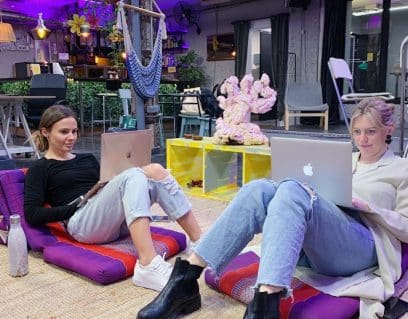
At La Vaca, that’s built in: yoga every Tuesday at 18:30, football every Wednesday at 18:45 and a monthly Afterwork Artístico where members and neighbours meet over art and drinks. Find out more about our yoga classes in Poble Sec.
Work from La Vaca during your stay
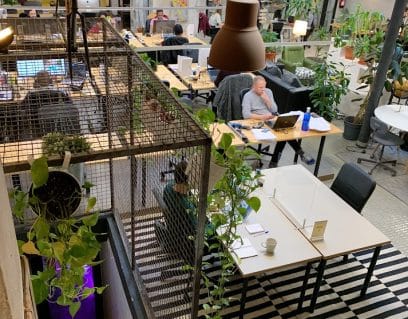
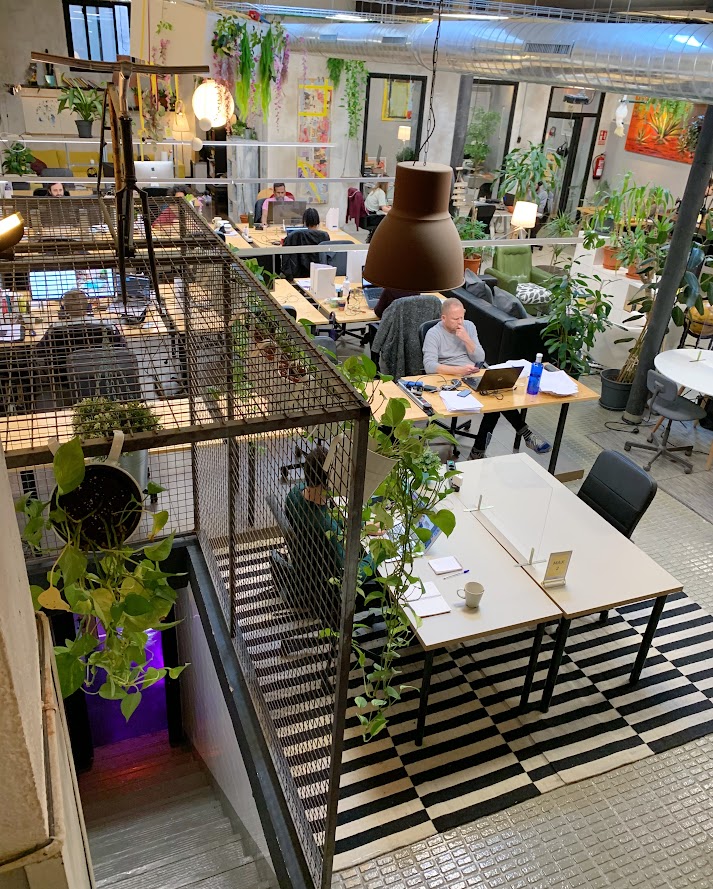
La Vaca is a creative coworking in a former dairy (a vaquería) in Poble Sec, a short walk from Carrer Blai and Sant Antoni. We’re open Monday to Friday, 9:00 to 20:00, with soundproof phone booths, a meeting room, a shared kitchen and an international community of freelancers, remote workers and startups.
Passes that suit nomads:
- Day Pass: perfect for your first days in the city.
- Week Pass: for short stays or to test a routine.
- 10-Day Pass: flexible days to use whenever you need a desk.
Your first day is a free trial, so come and see if it feels right. Questions? Check our FAQ or call us on +34 931 19 81 12.